
Keyword Research for Beginners: Easy SEO Guide (2026)

Keyword Research for Beginners: How to Find the Right Keywords for SEO
If you want your website or blog to rank on Google, keyword research is one of the first things you need to learn.
Many beginners think SEO is only about writing content, but the real secret is understanding what people are searching for online. That is exactly where keyword research helps.
In this beginner-friendly guide, you will learn:
- What keyword research is
- Why keywords matter in SEO
- Types of keywords
- How to find keywords
- Best free keyword research tools
- Beginner SEO tips for choosing the right keywords
What is Keyword Research?
Keyword research is the process of finding the words and phrases people type into Google while searching for information, products, or services.
For example:
- “best digital marketing course”
- “SEO tips for beginners”
- “how to rank website on Google”
These search terms are called keywords.
By using the right keywords in your content, Google can better understand your page and show it to the right audience.
Why is Keyword Research Important for SEO?
Keyword research helps you:
- Understand what people are searching for
- Create content your audience actually wants
- Increase website traffic
- Improve Google rankings
- Reach potential customers
Without keyword research, you may write content nobody searches for.
That is why keywords are considered the foundation of SEO.
Types of Keywords in SEO
1. Short-Tail Keywords
These are broad search terms with high competition.
Examples:
- SEO
- Digital marketing
- Blogging
They usually have high search volume but are harder to rank for.
2. Long-Tail Keywords
These are longer and more specific phrases.
Examples:
- SEO tips for beginners
- Best free SEO tools for small businesses
- How to do keyword research for blogs
Long-tail keywords are easier to rank for and are great for beginners.
3. Local Keywords
These keywords target a specific location.
Examples:
- SEO agency in Kerala
- Digital marketing course in Calicut
Local keywords help businesses attract nearby customers.
How to Do Keyword Research for Beginners
Step 1: Think About Your Topic-Brainstorming
Start with a simple topic related to your website or business.
Example:
If your website is about SEO, your topic could be:
- On-page SEO
- Keyword research
- Technical SEO
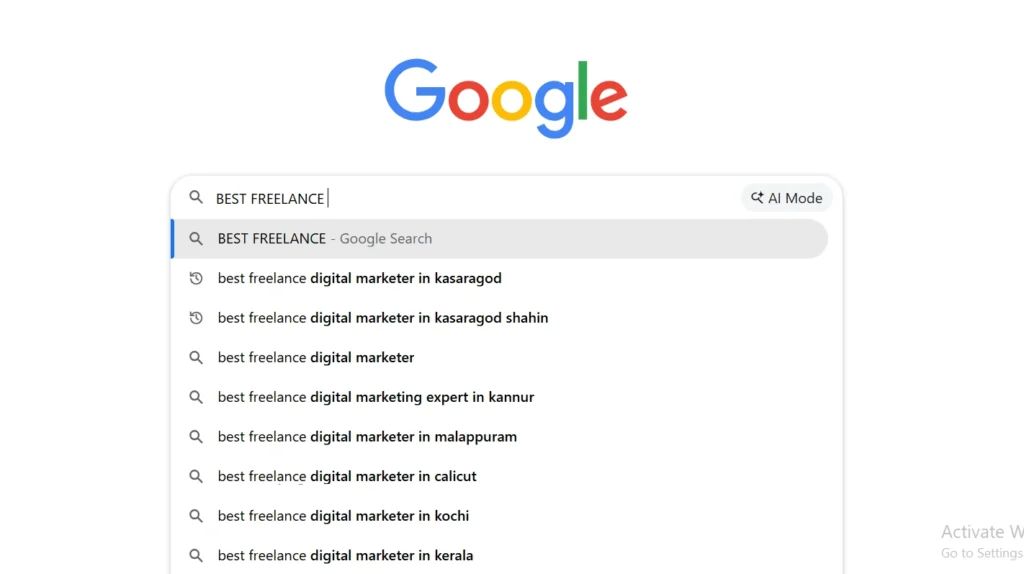
Step 2: Use Google Search Suggestions
Go to Google and start typing your topic.
Google will automatically show popular searches.
Example:
Typing “keyword research” may show:
- keyword research for beginners
- keyword research tools
- keyword research for SEO
These suggestions are real searches made by users.
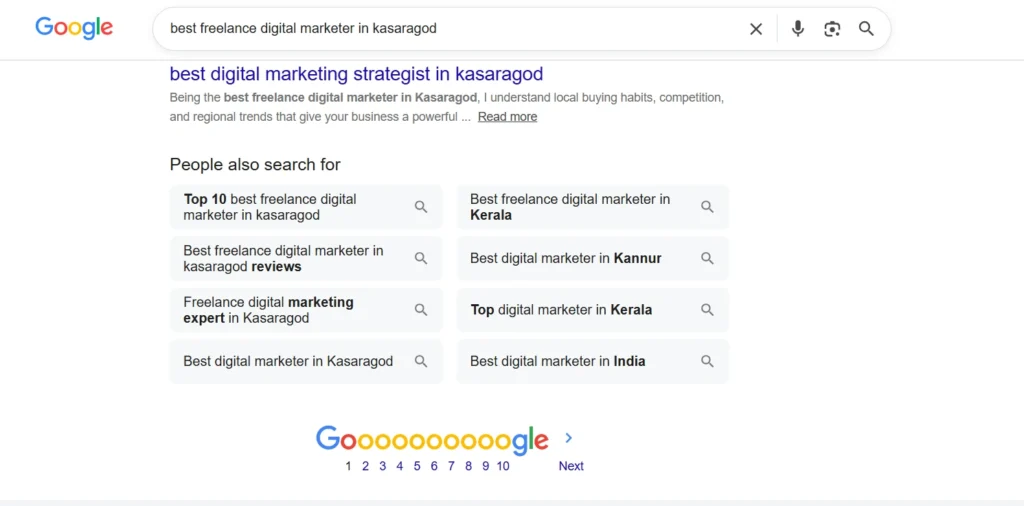
Step 3: Check “People Also Ask”
Google’s “People Also Ask” section gives more keyword ideas and content topics.
This is useful for:
- Blog headings
- FAQ sections
- Long-tail keywords
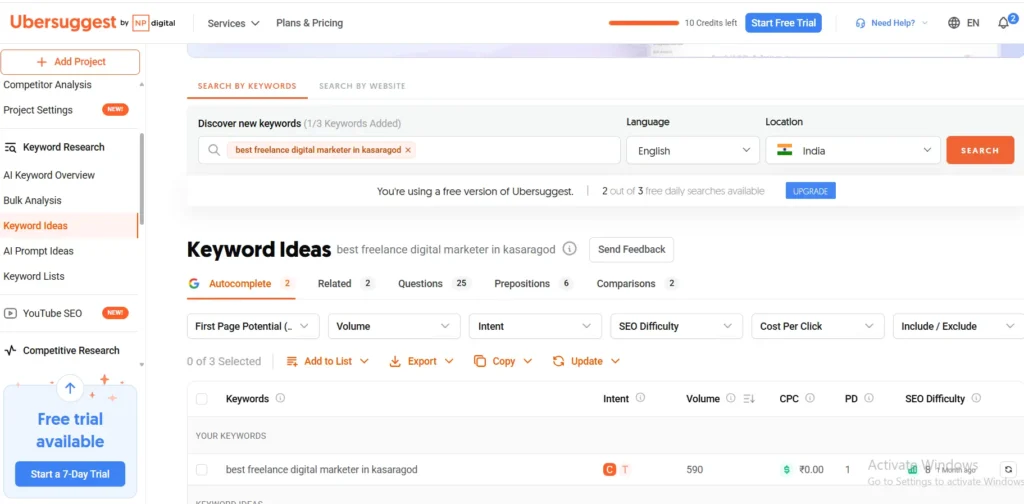
Step 4: Use Free Keyword Research Tools
Here are some beginner-friendly keyword research tools:
Google Keyword Planner
A free tool by Google for finding keyword ideas and search volume.
Ubersuggest
Helps beginners discover keyword difficulty and SEO opportunities.
Ahrefs Free Keyword Generator
Provides keyword ideas and related questions.
Google Trends
Shows trending searches and keyword popularity over time.
How to Choose the Right Keywords
As a beginner, do not target highly competitive keywords immediately.
Instead, focus on:
- Long-tail keywords
- Low competition keywords
- Keywords with clear search intent
Good example:
Instead of targeting “SEO”
Target:
“SEO tips for beginners”
This gives you a better chance to rank on Google.
Understanding Search Intent
Search intent means the reason behind a search.
There are mainly four types:
Informational
People want information.
Example:
- What is SEO
Navigational
People want to visit a specific website.
Example:
- YouTube login
Transactional
People want to buy something.
Example:
- Buy SEO course online
Commercial
People compare products or services.
Example:
- Best SEO tools for beginners
Understanding search intent helps you create better content.
Common Keyword Research Mistakes Beginners Make
Targeting Very Competitive Keywords
Big websites already dominate these keywords.
Ignoring Search Intent
A keyword may get traffic but not the right audience.
Keyword Stuffing
Using keywords too many times can hurt SEO.
Not Using Long-Tail Keywords
Long-tail keywords are easier for new websites.
Beginner SEO Tips for Keyword Research
- Use your main keyword in the title
- Add keywords naturally in headings
- Include keywords in the meta description
- Use related keywords throughout the article
- Write content for humans first, not just search engines
Frequently Asked Questions
What is keyword research in SEO?
Keyword research is the process of finding the words and phrases people use in search engines to discover information, products, or services. It helps you create content that matches user searches.
Why is keyword research important?
Keyword research helps you understand what your audience is searching for, improve your content strategy, increase organic traffic, and boost your chances of ranking on Google.
Which keyword research tool is best for beginners?
Google Keyword Planner, Ubersuggest, Google Trends, and Ahrefs Free Keyword Generator are popular and beginner-friendly keyword research tools.
What are long-tail keywords?
Long-tail keywords are longer and more specific search phrases, such as “keyword research for beginners.” They usually have lower competition and are easier to rank for.
How do I find low-competition keywords?
You can find low-competition keywords by using keyword research tools, analyzing search suggestions, checking the People Also Ask section, and targeting long-tail keywords.
What is search intent in SEO?
Search intent refers to the reason behind a user’s search query. It can be informational, navigational, commercial, or transactional.
Can I do keyword research for free?
Yes. Free tools like Google Keyword Planner, Google Trends, Google Search Suggestions, and Ahrefs Free Keyword Generator can help you perform effective keyword research.
Final Thoughts
Keyword research is one of the most important parts of SEO.
Once you understand what people are searching for, creating content becomes much easier.
As a beginner, focus on:
- Finding low-competition keywords
- Understanding search intent
- Creating useful content consistently
Over time, this can help improve your Google rankings and grow your website traffic.
Want to learn more about SEO and digital marketing?
Read more beginner-friendly guides on:
https://shahindigitalhub.com/
Pingback: On-Page SEO Checklist for Beginners: 10 Simple Steps to Rank Better on Google - shahindigitalhub.com