
Common SEO Mistakes Beginners Make: A Complete Guide for Beginners
Search Engine Optimization (SEO) is one of the most powerful digital marketing skills you can learn. It helps websites rank higher on Google, attract organic traffic, and generate leads without paying for ads.
However, many beginners unknowingly make mistakes that prevent their websites from ranking. These errors can slow down website growth, reduce visibility, and make SEO efforts ineffective.
If you’re just starting your SEO journey, understanding the Common SEO Mistakes Beginners Make can save you months of frustration and help you achieve better results faster.
In this guide, we’ll cover the most common SEO mistakes beginners make, explain why they happen, and show you how to fix them.
Why Understanding Common SEO Mistakes Beginners Make Is Important
SEO isn’t about tricking Google.
Modern SEO focuses on providing valuable content, a good user experience, and clear signals that help search engines understand your website.
Many beginners focus on shortcuts instead of building a strong foundation. This often leads to poor rankings, low traffic, and wasted effort.
Learning the Common SEO Mistakes Beginners Make helps you:
- Improve website rankings
- Increase organic traffic
- Create better content
- Avoid Google penalties
- Build long-term authority
1. Ignoring Keyword Research
One of the biggest Common SEO Mistakes Beginners Make is publishing content without proper keyword research.
Many people write articles based solely on what they think users are searching for.
The reality?
Google ranks content that matches actual search intent.
How to Fix It
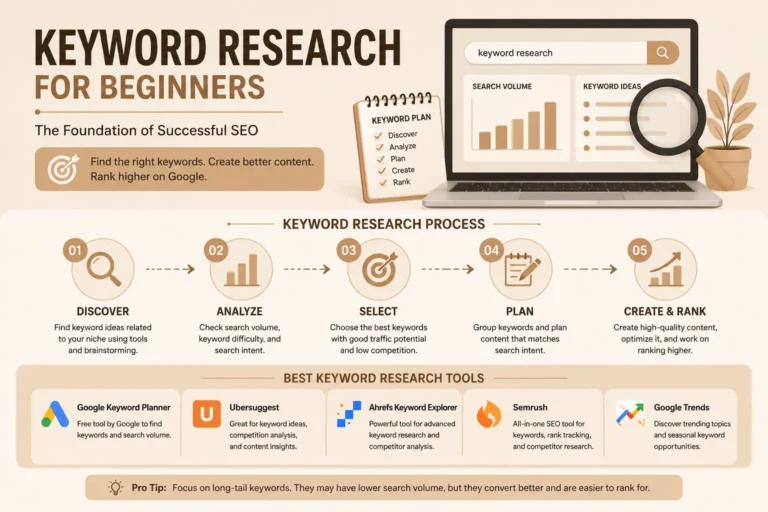
Use keyword research tools such as:
- Google Keyword Planner
- Ubersuggest
- Ahrefs
- Semrush
Look for:
- Search volume
- Keyword difficulty
- User intent
- Related keywords
Example
Instead of writing:
“Tips for SEO”
Target:
“SEO Tips for Beginners”
This is more specific and easier to rank for.
2. Targeting Extremely Competitive Keywords
Beginners often chase keywords dominated by large brands.
For example:
- SEO
- Digital Marketing
- Marketing Tips
These keywords are highly competitive.
Better Approach
Focus on long-tail keywords:
- Common SEO Mistakes Beginners Make
- SEO Checklist for Beginners
- How to Learn SEO Step by Step
Long-tail keywords are easier to rank for and often convert better.
3. Keyword Stuffing
Years ago, websites could rank by repeating keywords excessively.
Today, keyword stuffing hurts SEO.
Example of Keyword Stuffing
“Common SEO Mistakes Beginners Make are common SEO mistakes beginners make because common SEO mistakes beginners make affect rankings.”
This looks unnatural and creates a poor reading experience.
Best Practice
Use your keyword naturally throughout:
- Title
- Introduction
- Subheadings
- Conclusion
Also include related keywords.
4. Creating Thin Content
Thin content is content that provides little value.
Many beginners write 300–500 word articles and expect them to rank.
Google prefers comprehensive content that answers user questions.
Signs of Thin Content
- Lack of depth
- No examples
- No structure
- No actionable tips
How to Fix It
Create detailed articles that:
- Solve problems
- Answer questions
- Include examples
- Cover the topic completely
5. Not Understanding Search Intent
Another one of the major Common SEO Mistakes Beginners Make is ignoring search intent.
Search intent refers to the reason behind a user’s search.
Types of Search Intent
Informational Intent
Example:
“What is SEO”
Navigational Intent
Example:
“Google Search Console”
Transactional Intent
Example:
“Buy SEO Course”
Commercial Intent
Example:
“Best SEO Tools”
Your content should match the user’s intent.
6. Missing Title Tag Optimization
The title tag is one of the most important ranking factors.
Many beginners either:
- Ignore title optimization
- Write vague titles
- Create titles without keywords
Example
Poor Title:
“SEO Guide”
Better Title:
“Common SEO Mistakes Beginners Make and How to Fix Them”
7. Writing Weak Meta Descriptions
Meta descriptions may not directly affect rankings, but they improve click-through rates.
Good Meta Description
- Includes focus keyword
- Explains the benefit
- Encourages clicks
Example:
“Discover the common SEO mistakes beginners make and learn practical strategies to improve rankings and increase organic traffic.”
8. Ignoring Internal Linking
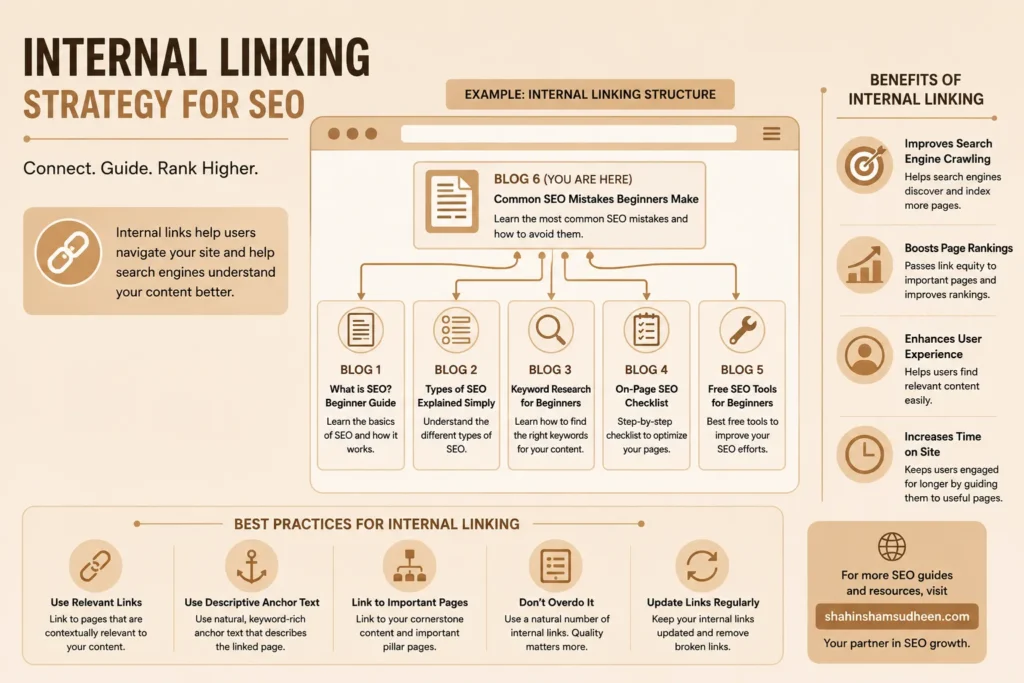
Internal links help users and search engines navigate your website.
This is one of the easiest SEO wins.
Internal Link Opportunities
Link this article to:
- What is SEO? Beginner Guide
- Types of SEO Explained Simply
- Keyword Research for Beginners
- On-Page SEO Checklist
- Free SEO Tools for Beginners
These internal links strengthen your SEO structure.
9. Not Optimizing Images
Images improve user experience but can hurt SEO if not optimized.
Common Image Mistakes
- Large file sizes
- Missing alt text
- Generic filenames
Example
Bad Filename:
image123.jpg
Good Filename:
common-seo-mistakes-beginners-make.jpg
Alt Text Example
“Common SEO mistakes beginners make infographic”
10. Forgetting Mobile Optimization
Google uses mobile-first indexing.
If your website performs poorly on mobile devices, rankings may suffer.
Mobile SEO Checklist
- Responsive design
- Fast loading speed
- Readable fonts
- Easy navigation
11. Poor Website Speed
Website speed affects both rankings and user experience.
Slow websites lead to:
- Higher bounce rates
- Lower engagement
- Reduced conversions
Ways to Improve Speed
- Compress images
- Use caching
- Reduce plugins
- Use a CDN
12. Not Using Header Tags Properly
Header tags help organize content.
Structure Example
H1:
Common SEO Mistakes Beginners Make
H2:
Ignoring Keyword Research
H3:
How to Fix It
This structure improves readability and SEO.
13. Publishing Content Inconsistently
Many beginners publish:
- 5 articles in one week
- Then nothing for months
Consistency matters.
Better Strategy
Publish:
- 1–2 quality articles weekly
Consistency helps Google discover and trust your website.
14. Ignoring Google Search Console
One of the most damaging Common SEO Mistakes Beginners Make is not using Google Search Console.
Google Search Console helps you:
- Monitor rankings
- Fix indexing issues
- Track keywords
- Identify errors
External Resource
Google Search Console:
https://search.google.com/search-console
15. Expecting Instant Results
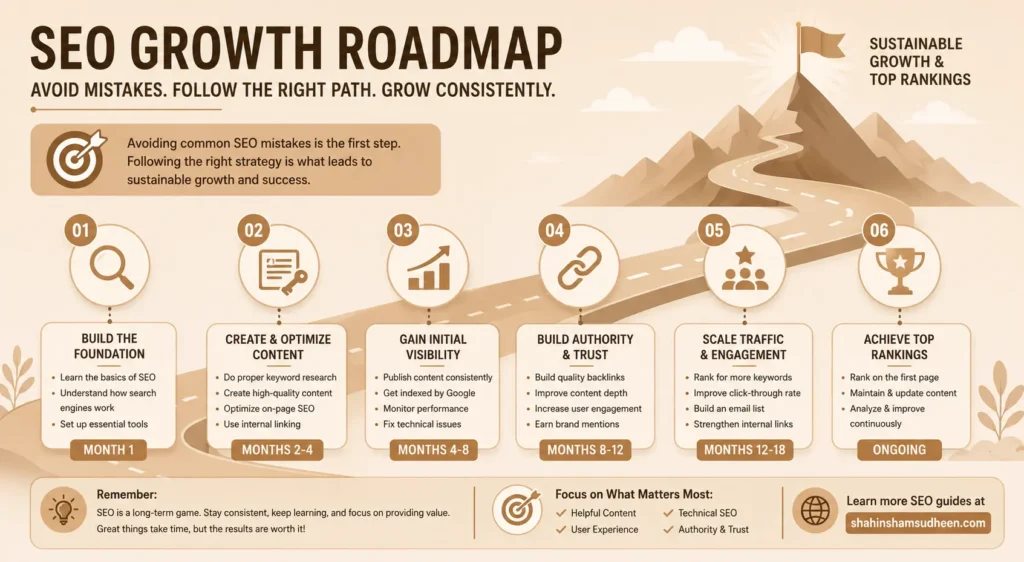
SEO takes time.
Many beginners quit after a few weeks because they don’t see immediate results.
SEO is a long-term strategy.
Realistic Expectations
- First month: Foundation building
- Months 2–4: Initial visibility
- Months 4–8: Traffic growth
- Months 8–12: Authority development
Patience is essential.
How to Avoid Common SEO Mistakes Beginners Make
Follow this simple framework:
Step 1: Research Keywords
Use keyword tools before writing.
Step 2: Understand Search Intent
Create content users actually want.
Step 3: Write Helpful Content
Focus on solving problems.
Step 4: Optimize On-Page SEO
Use:
- Title tags
- Meta descriptions
- Headings
- Internal links
Step 5: Track Performance
Use:
- Google Search Console
- Google Analytics
Step 6: Stay Consistent
Publish regularly and improve existing content.
About the Author
If you’re looking to learn practical SEO strategies and digital marketing techniques, explore more guides and resources on my website:
I regularly share insights about SEO, content marketing, website optimization, and digital growth strategies for beginners and businesses.
Frequently Asked Questions
What are the most common SEO mistakes beginners make?
The most common SEO mistakes beginners make include ignoring keyword research, keyword stuffing, poor internal linking, thin content, slow website speed, and not understanding search intent.
Can SEO mistakes hurt rankings?
Yes. SEO mistakes can reduce visibility, lower rankings, increase bounce rates, and negatively impact user experience.
How long does it take to see SEO results?
Most websites begin seeing noticeable SEO improvements within 3 to 6 months, depending on competition and content quality.
Is keyword stuffing still effective?
No. Keyword stuffing is considered a spammy SEO practice and can negatively affect rankings.
What is the easiest SEO mistake to fix?
Internal linking is one of the easiest SEO improvements beginners can make and often provides quick benefits.