
How to Write a Blog Post in 10 Simple Steps (Complete Beginner's Guide)

If you’re wondering how to write a blog post that attracts readers, ranks on Google, and drives traffic to your website, you’re in the right place.
Writing a blog post isn’t just about putting words on a page. A successful blog combines valuable information, proper structure, SEO optimization, and engaging writing. Whether you’re a beginner, business owner, freelancer, or digital marketer, learning how to write a blog post is one of the most valuable skills you can develop.
In this guide, you’ll learn the exact step-by-step process to create high-quality blog posts that both readers and search engines love.
Why Blog Writing Matters
A well-written blog post can help you:
- Increase website traffic
- Improve Google rankings
- Build authority in your niche
- Generate quality leads
- Answer customer questions
- Increase brand awareness
- Improve conversions
Publishing useful content consistently also helps search engines understand your website better, making it easier for potential customers to discover your business online.
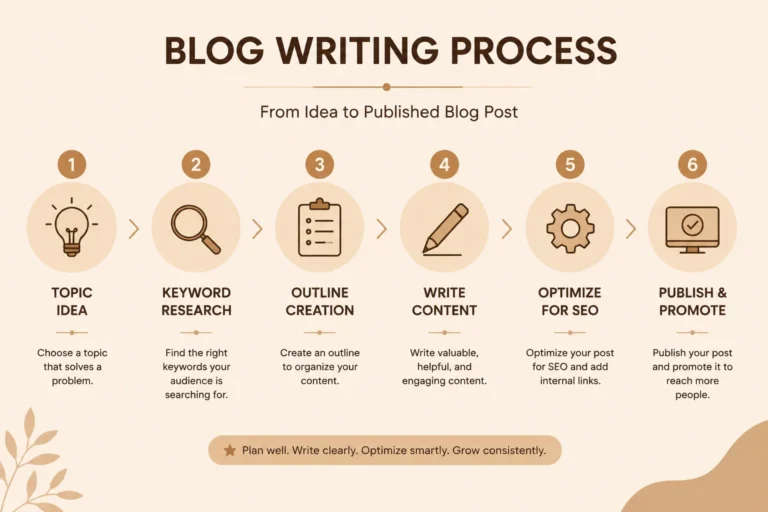
Step 1: Choose the Right Blog Topic
The first step in learning how to write a blog post is selecting a topic that your audience actually wants to read.
Ask yourself:
- What problems do people face?
- What questions are they asking?
- What keywords are they searching for?
- Can I provide a better answer than existing articles?
Good blog topics solve problems instead of simply sharing opinions.
Examples
- How to Write a Blog Post
- SEO Tips for Beginners
- Email Marketing Strategies
- Google Ads Guide
- Digital Marketing Trends
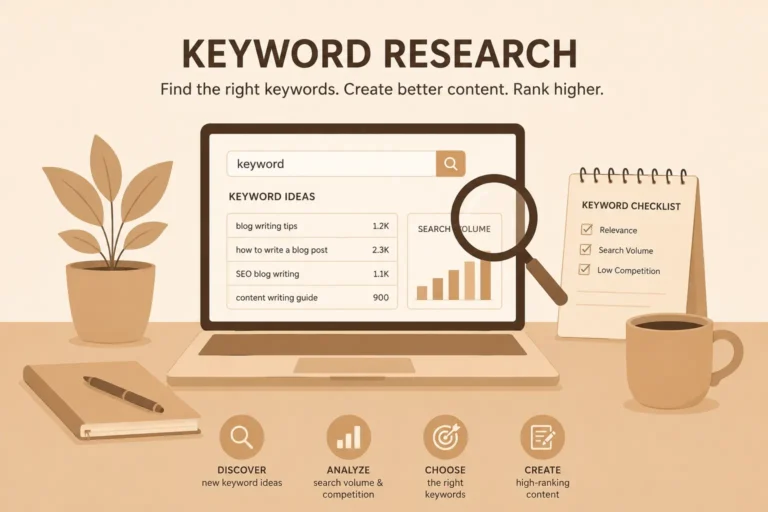
Step 2: Do Keyword Research
Keyword research helps you understand what people are searching for.
Use tools like:
- Google Keyword Planner
- Google Search Suggestions
- Google Trends
- Ubersuggest
- Ahrefs
- SEMrush
Look for:
- High search volume
- Low competition
- Long-tail keywords
- Search intent
Primary Keyword:
How to Write a Blog Post
Related Keywords:
- blog writing tips
- SEO blog writing
- blog post format
- blog writing guide
- how to start blogging
Using related keywords naturally helps Google understand your content better.
Step 3: Understand Search Intent
Before writing, search your keyword on Google.
Study the first-page results.
Ask:
- Are they guides?
- Are they tutorials?
- Are they lists?
- Are they beginner-friendly?
- What questions are they answering?
Your goal isn’t to copy competitors.
Your goal is to create something more helpful, more complete, and easier to understand.
Step 4: Create an Outline
Professional writers never start with a blank page.
Instead, create an outline first.
Example structure:
- Introduction
- Why the topic matters
- Step-by-step guide
- Examples
- Common mistakes
- FAQs
- Conclusion
- Call-to-action
An outline keeps your article organized and improves readability.
Step 5: Write an Engaging Introduction
The introduction should immediately tell readers:
- What they’ll learn
- Why it matters
- What benefit they’ll receive
Avoid long introductions.
Instead, get straight to the point.
Example:
“Learning how to write a blog post can help you increase website traffic, improve search rankings, and establish authority in your industry. In this guide, we’ll walk you through every step from choosing the right topic to publishing an SEO-friendly article.”
Step 6: Write Valuable Content
Now it’s time to write the main content.
Every section should answer a question or solve a problem.
Tips:
- Keep paragraphs short.
- Use headings.
- Add bullet points.
- Include examples.
- Write conversationally.
- Avoid unnecessary jargon.
- Focus on helping readers.
Remember:
Google rewards content that satisfies user intent rather than content stuffed with keywords.
Step 7: Optimize Your Blog Post for SEO
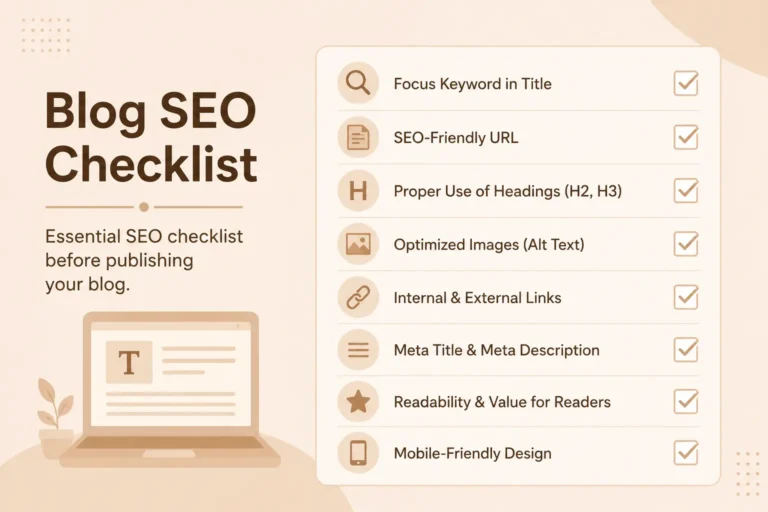
Once you’ve finished writing, it’s time to optimize your content for search engines. SEO helps your blog rank higher on Google, making it easier for people to find your content.
Here are some essential on-page SEO tips:
- Include your focus keyword naturally in the title, first paragraph, headings, and conclusion.
- Write a compelling meta title and meta description.
- Add descriptive image alt text.
- Use short, keyword-friendly URLs.
- Link to other relevant pages on your website.
- Link to trusted external sources.
- Keep your paragraphs short and easy to read.
- Use bullet points and numbered lists where appropriate.
Remember, SEO is about improving the user experience—not just adding keywords.
Step 8: Add Images and Visual Content
Visual content makes your blog more engaging and easier to understand. Images also increase the amount of time visitors spend on your page.
Consider including:
- Infographics
- Screenshots
- Flowcharts
- Checklists
- Comparison tables
- Custom graphics
Every image should be compressed for faster loading and include descriptive file names and alt text for better SEO.
Step 9: Proofread Before Publishing
Even the best articles can lose credibility if they contain grammar mistakes or broken formatting.
Before publishing:
- Check spelling and grammar.
- Read the article aloud.
- Ensure headings are in the correct order (H2, H3).
- Verify that all links work.
- Remove repetitive sentences.
- Check mobile readability.
- Preview the article before publishing.
A polished blog creates a better experience for your readers.
Step 10: Promote Your Blog Post
Publishing your blog is only the beginning. To reach a wider audience, you need to promote it.
Share your blog on:
- X (Twitter)
- Medium
- Quora (where appropriate)
- Google Business Profile
- Email newsletters
You can also repurpose your blog into short videos, infographics, or carousel posts to maximize its reach.
Common Mistakes to Avoid When Writing a Blog Post
Avoid these common blogging mistakes:
- Choosing topics without keyword research.
- Writing long paragraphs that are hard to read.
- Ignoring search intent.
- Overusing keywords (keyword stuffing).
- Not adding internal or external links.
- Forgetting to optimize images.
- Publishing without proofreading.
- Using misleading or clickbait titles.
- Neglecting mobile users.
- Failing to include a clear call-to-action.
Avoiding these mistakes will improve both user experience and search engine rankings.
Tips to Make Your Blog Stand Out
If you want your content to outperform competitors:
- Write original, helpful content.
- Include real examples and practical advice.
- Update older posts regularly.
- Use clear headings and formatting.
- Answer common questions.
- Add visuals that support your content.
- Focus on solving readers’ problems.
Consistently publishing valuable content builds trust and authority over time.
Frequently Asked Questions (FAQs)
1. How long should a blog post be?
A blog post should typically be between 1,000 and 2,000 words for competitive topics. However, quality and relevance matter more than word count.
2. How many times should I use my focus keyword?
Use your focus keyword naturally throughout the content. Avoid keyword stuffing. Include it in the title, introduction, headings, and conclusion where it fits.
3. How often should I publish blog posts?
Publishing one high-quality blog post each week is a great starting point. Consistency is more important than frequency.
4. Can beginners write SEO-friendly blog posts?
Yes. By following a structured process, doing keyword research, and focusing on user intent, beginners can create blog posts that perform well in search engines.
5. Should every blog include images?
Yes. Images improve readability, engagement, and SEO when optimized with descriptive file names and alt text.
Final Thoughts
Learning how to write a blog post is one of the most valuable skills for bloggers, freelancers, business owners, and digital marketers. A successful blog post combines valuable information, proper formatting, SEO optimization, and a clear understanding of your audience’s needs.
Instead of writing only for search engines, focus on creating content that genuinely helps readers. When your content answers questions, solves problems, and provides a great user experience, search engines are more likely to reward it with higher rankings.
Start applying these 10 steps today, and with consistency, you’ll create blog posts that attract more visitors, build trust, and support your long-term online growth.
Call to Action
Need help creating SEO-friendly blog content that drives traffic and generates leads?
At Shahin Digital Hub, I provide professional SEO, content marketing, website optimization, and digital marketing services to help businesses grow online. Get in touch today to build a content strategy that delivers real results.
Great content! Keep up the good work!